
AV safety - by the book
How Digital Commentary Driving reflects the UK Government’s AI assurance principles as a proactive tool for monitoring the safety of automated vehicles
As automated vehicles (AVs) move from development programmes towards deployment on public roads, an important question is becoming increasingly urgent: how do we know that their driving remains safe as they operate at scale?
The UK government’s Artificial Intelligence Playbook, published by the Government Digital Service in February 2025, provides useful principles. Although written for the use of AI across government rather than specifically for automated vehicles, its approach to assurance has striking parallels with the Digital Commentary Driving (DCD) concept, first outlined in my work for BSI in 2021.
DCD proposes that automated driving systems should make available a standardised stream of structured, safety-relevant operational data. The objective is not to ask an AI system to produce a natural-language explanation of why it made a particular decision, nor is DCD primarily intended as a tool for investigating crashes after they occur. Its value lies in being proactive: using data generated during everyday AV driving to identify behaviours that may be leading indicators of increased crash risk, allowing action to be taken before those risks result in harm.
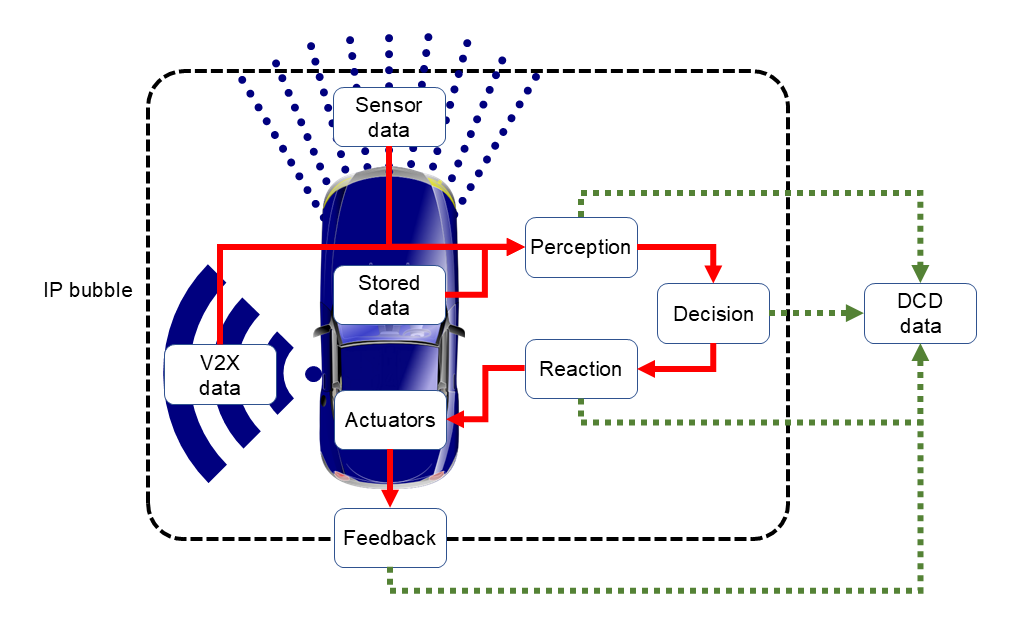
Figure 1. Illustration of DCD concept - standardised, structured collection of the data needed to demonstrate ‘careful and competent’ driving.
This fits closely with the Playbook’s approach to AI assurance. It states that AI systems should be evaluated throughout their lifecycle (including during operation) and that quality assurance should provide evidence that systems are fit for purpose. Assurance is not presented as something completed before deployment. The Playbook is explicit about operational monitoring, recommending ongoing performance monitoring both to demonstrate that a deployed system is operating as expected and to identify changes in its behaviour as the system and its operating environment evolve.
For automated driving, this is more than good practice. Section 38 of the Automated Vehicles Act 2024 places a duty on the Secretary of State to establish effective and proportionate arrangements for monitoring and assessing the general performance of authorised AVs in use on Britain's roads and other public places. That monitoring must include assessment of the extent to which their performance remains consistent with the Statement of Safety Principles, with the findings reported annually. This creates an important question: what should we monitor?
Crashes and injuries are vital safety outcomes but they are comparatively rare and, importantly, they are lagging indicators. Waiting for a pattern of crashes to emerge before identifying a problem is not an adequate approach to assuring safety-critical AI. DCD could provide a way to move the detection of collision risk upstream. By recording consistent safety-relevant information about how AVs perceive and respond to the driving environment, it becomes possible to look for changes and patterns across millions of routine interactions. These might include narrow safety margins, late responses to developing hazards, unusual interactions with particular road users or systematic changes following a software update.
The challenge is to establish which of these measures genuinely and reliably predict increased risk. If such relationships can be demonstrated, DCD could provide the foundation for leading indicators of automated driving safety, detecting weak signals of deteriorating performance and triggering investigation and remediation before a crash occurs. This reflects both the AI Playbook’s emphasis on quantitative validation and objective evidence and the challenge presented by the AV Act of in-use monitoring.
Building that evidence base is now the subject of new research. A PhD project that I am co-supervising with Professor Saber Fallah and Paul Spence and supported by DVSA has recently commenced to further develop the DCD concept in simulation. This provides an opportunity to investigate how structured DCD data from simulated AVs can be used to characterise automated driving behaviour and, ultimately, to explore which measures have the potential to provide meaningful leading indicators of safety performance.

Figure 2. The University of Surrey, DVSA and co-supervisory team at the PhD kick-off meeting earlier this year.
DCD should therefore be viewed as an observability and assurance framework for safety-critical AI in the context of AVs.
The UK government’s AI Playbook establishes the principle that deployed AI should be continuously evaluated and monitored. The AV Act establishes a statutory requirement to monitor the in-use safety performance of authorised AVs. DCD could help bridge the two: providing the data needed to identify the precursors of unsafe behaviour early enough to intervene and prevent tragic outcomes before they occur. I am excited to see how this research develops…