
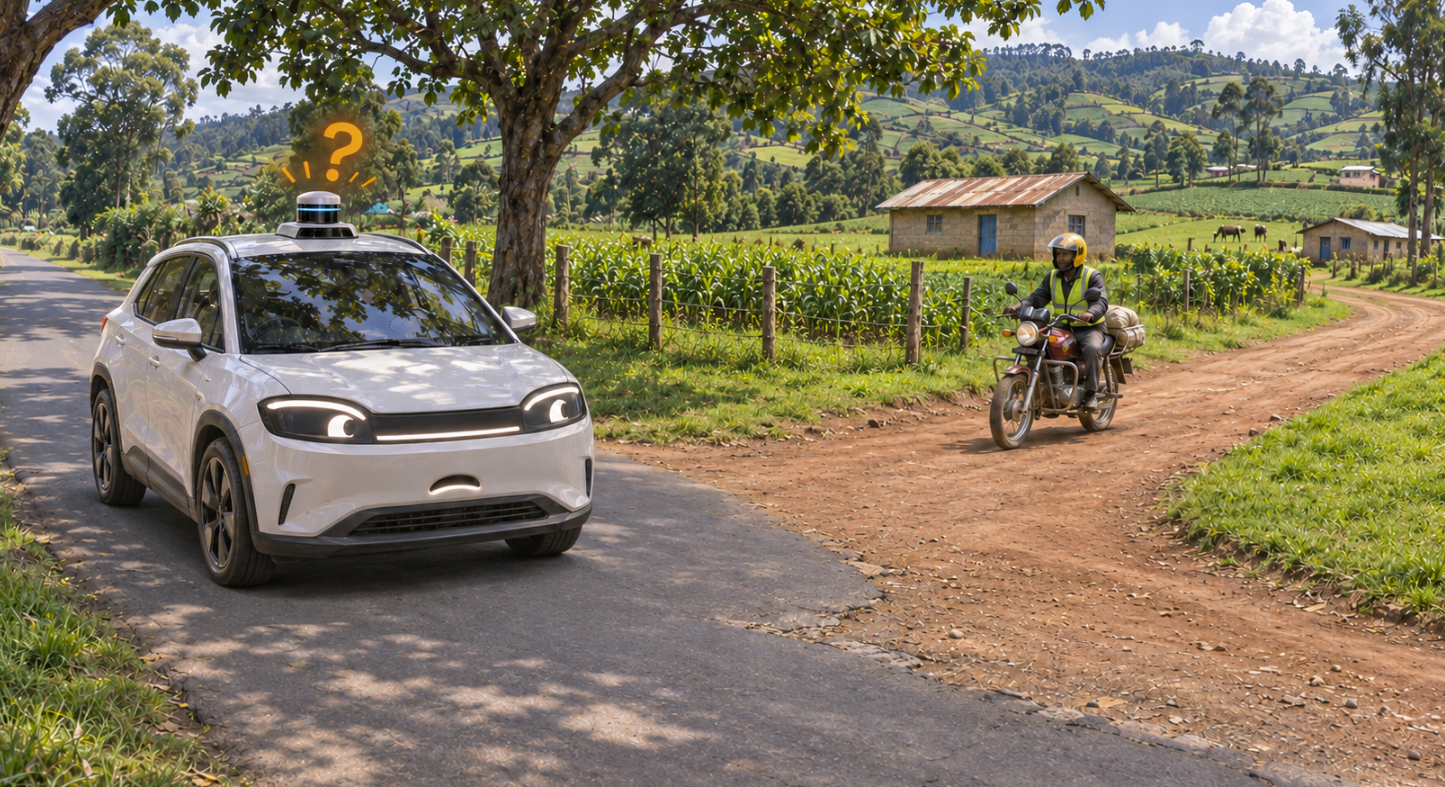
Much of my work to date has focused on figuring out how to confirm that automated vehicles (AVs) are safe enough to share the road with the rest of us. My passion for this work stems from my overriding interest in road safety and my strong belief that AVs will be a key contributor to reducing the level of deaths and serious injuries on our roads.
However, the World Health Organization estimates that 92% of the world’s road deaths occur in low- and middle-income countries (LMICs). It is reasonable to conclude that AVs will not solve the global road safety challenge any time soon. We’ll need a much wider toolbox to solve this problem but that’s not to say that technology and innovation is not relevant. There are real opportunities for countries without established processes and legacy infrastructure to think differently about how to tackle road risk.
Becoming an associate at Crossroads Consulting, alongside my work at Reed Mobility, gives me a chance to offer my experience in this space and support the application of the right technologies in context that can do the most to prevent road death and serious injury.
The approach internationally acknowledged as the most effective framework for improving road safety is the Safe System. This starts from the assertion that no-one should suffer death or serious injury as a consequence of their interaction with the road transport system and builds on two principles. Firstly, that people make mistakes and secondly, that when collisions occur as a result, there is a limit to the forces the human body can withstand before suffering serious consequences.
Factors across infrastructure, speeds, vehicles, road users and post-crash care should all work together to minimise the likelihood of that outcome and prioritisation across these factors may vary dramatically between locations. This is reflected in the World Health Organization’s Save LIVES guidance from 2017. A proven example is speed cameras and automated enforcement. Effectiveness depends on having reliable equipment, a workable enforcement process and the capacity to keep it running. The World Bank provided extensive guidance on how this can be achieved.
However, new technologies are enabling road safety factors to be assessed in ways that would previously have been considered dangerous, impractical or expensive. An example from Vietnam has seen iRAP using AI to pick out features such as crossings and street lighting from imagery so that the safety of school routes can be assessed. The automated assessments are supported by subjective research, asking students where they feel unsafe on their journeys. This combination of technological capability and human sensibility is fascinating and, for me, is a great example of how we can get the best from modern approaches.
In my work, I’ve been exploring the use of AI to apply Safe System thinking to evidence from fatal crashes and make recommendations about incident prevention. Many crashes that appear unrelated might share particular causal features. These might be missed by an individual road authority but might create compelling evidence for change when assessed in aggregate.
Working with my Crossroads colleagues, these examples represent the sort of innovation I hope we can bring. Understanding the best of current and future technologies, recognising the challenges of delivering road safety change in context and working collaboratively to help reduce risk for all. The people who use, design and manage the roads understand how their roads work in practice. We want to work with them on practical innovations that make journeys provably safe and prevent tragic outcomes.